Monetizing a Position You Can’t Trade: Proxy Hedging and Options Carry on Illiquid Micro-Caps
A concentrated long in an illiquid micro-cap. Large paper gain. No listed options on the name. No borrow. Any block sale reprices the book against the seller. The holders need a way to wait without bleeding and to exit without dumping.
The structure below never transacts the illiquid name. It builds a liquid proxy for the hedgeable part of its risk and runs the options book entirely on that proxy: short calls at a pre-defined exit level, protective spreads to define the systematic tail.
1. Fixed exit
The strike is a price the holder already agrees to sell at. Once that holds, the short call has no adverse scenario on its own leg: below the strike premium is retained, through the strike the position is sold at the target and premium is retained. Assignment is fulfillment, not loss.
Premium is therefore cash against an approved sale instruction — a hedge for the waiting period. The only accepted risk is upside beyond the strike, defined as surplus at entry.
2. Entry timing: IV term structure
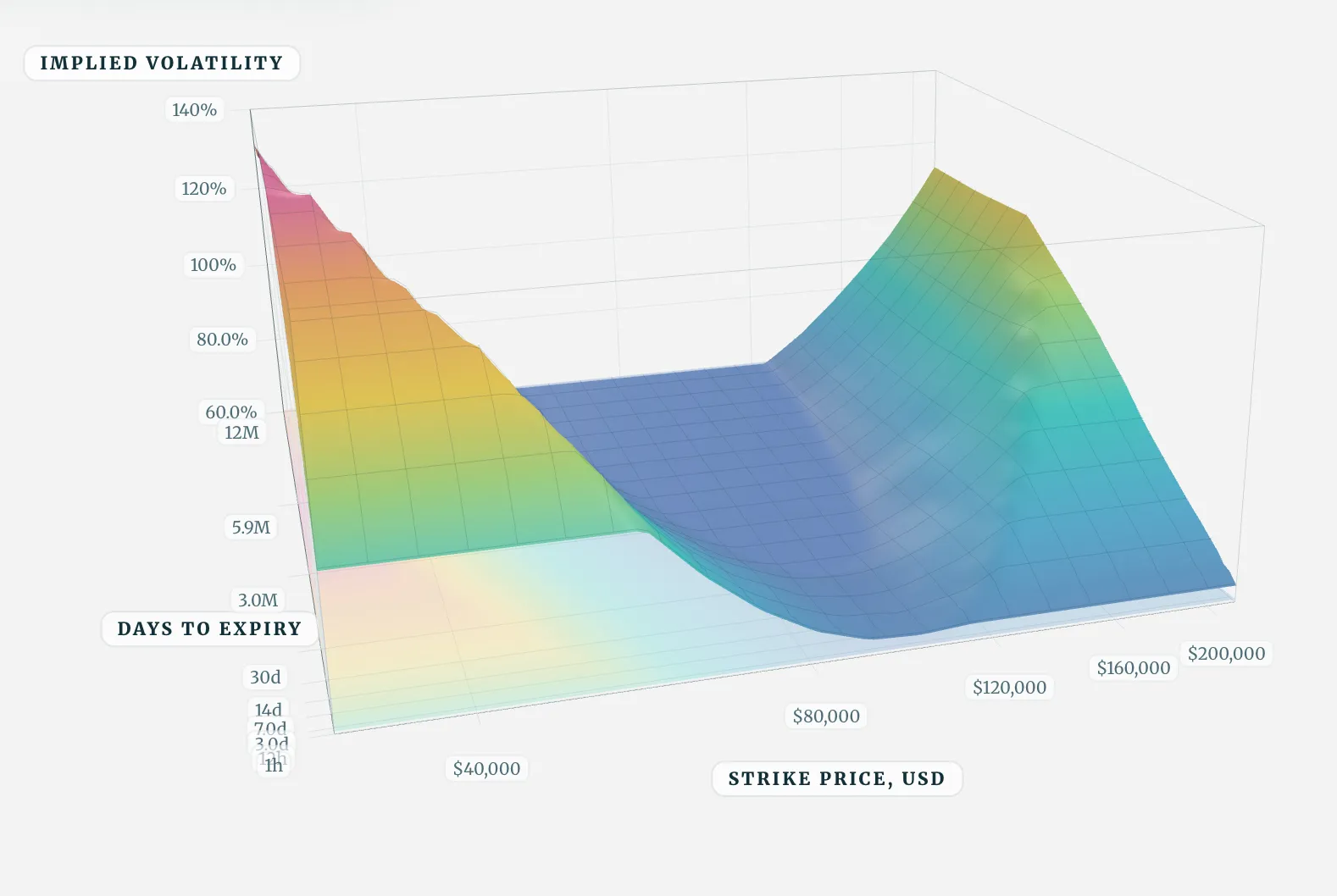
Systematic selling lives off the volatility risk premium — implied over realized, on average. No timing is required for it to function.
Front-tenor dislocation improves the average entry. When near-dated implied detaches from longer tenors on a proxy leg, the same delta pays more for shorter gamma duration. The sale shifts to the richer tenor; when the curve is flat, it proceeds at the standard tenor and delta. Dislocation is an upgrade, not a precondition.
3. The position that cannot be optioned
The working set: sub-$150M micro-caps, concentrated float, wide spreads, no options chain, no borrow. Systematic exposure to small-cap beta, sector beta, and style rotation — plus single-issuer idiosyncratic risk.
| Attribute | Illiquid micro-cap | Proxy leg |
|---|---|---|
| Listed options | No | Yes, two-sided quotes with open interest at traded deltas |
| Borrow / short | No | Yes, via liquid shares or ETF creation |
| Bid-ask spread | Wide, percent-level | Penny-wide on ETF, tight on liquid single-names |
| Daily dollar volume | Below block size | Multiple of allocated notional |
Only the systematic component can be mirrored elsewhere. The idiosyncratic component — outage, delay, financing term, regulatory print — belongs to the issuer and stays naked by construction.
4. Proxy basket
A single-ETF or single-peer proxy fails on basis: one peer’s earnings gap becomes your tracking error. The basket spreads that risk across several liquid legs, typically four to five, so no single proxy name decides the tracking. Sizing is by dollar-beta to the shared factors, re-estimated on schedule. A leg that stops loading is replaced.
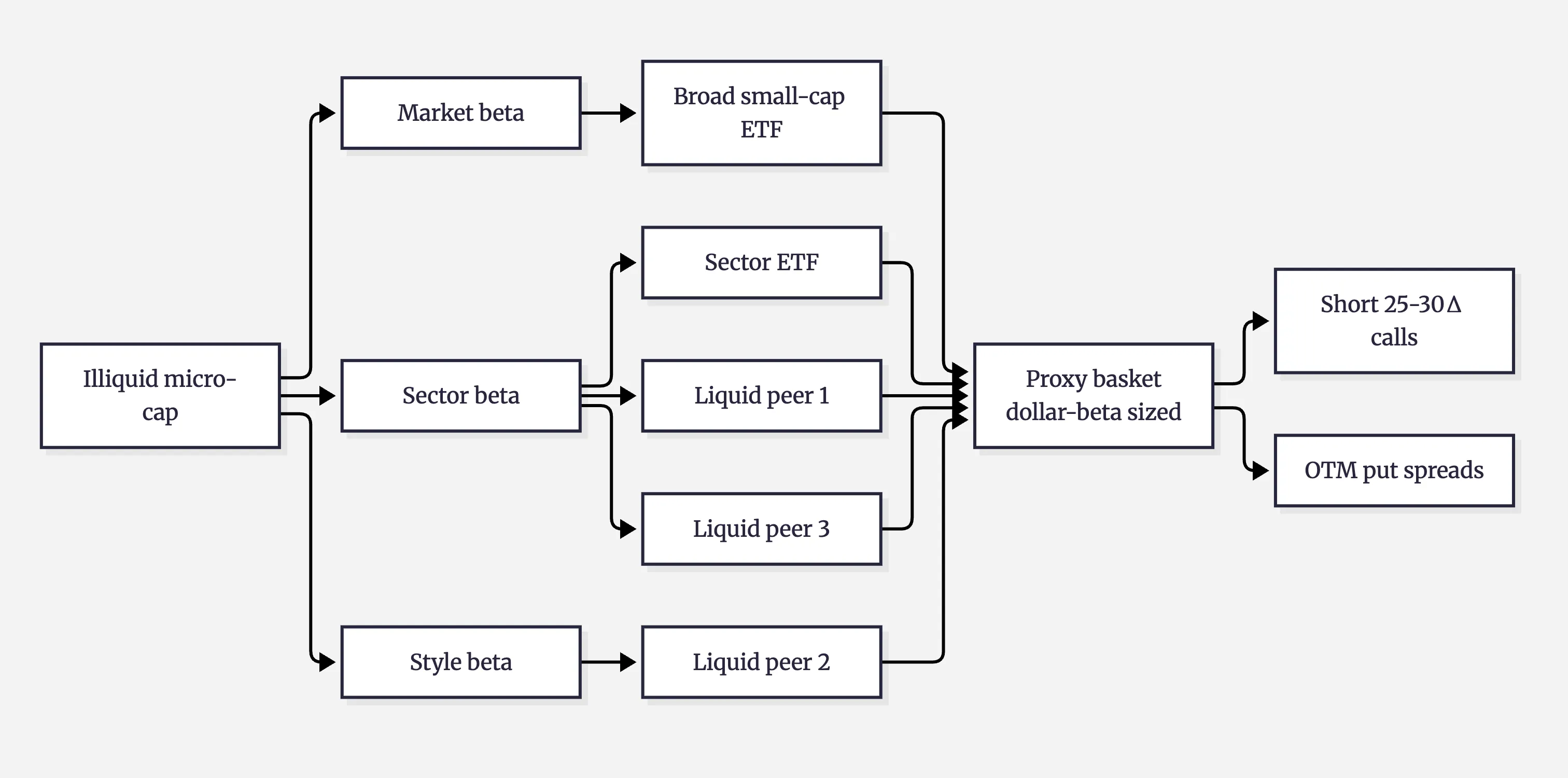
Reference case: for a renewable fuels micro-cap, that means a small-cap broad ETF leg for market beta, a clean-energy ETF leg for sector beta, plus liquid single-name producers or refiners with active chains and overlapping loadings. The template generalizes — industrials, biotech, software micro-caps each get their own sector leg and their own liquid peers. What stays constant is the rule: each leg must clear volume and open-interest constraints, otherwise it is excluded.
The basket tracks the systematic path — selloff, rotation, rate move.
5. Overlay: two legs
Both legs live on the proxy. Nothing is written on the illiquid name.
Premium leg: 25–30 delta short calls, short tenor, rolled on schedule per component. Assignment settles in the liquid market and is flattened there.
Protective leg: out-of-the-money put spreads on the ETF legs, longer tenor, held continuously. It caps the systematic drawdown of the basket leg.
In compressed-vol regimes premium thins against the protective spend — the response is to cut size or stand down, never to reach for lower strikes to chase premium. If correlation breaks and stays broken, or beta drifts beyond tolerance after a rebalance, the overlay is halved, then removed. A proxy that no longer tracks is closed, not defended.
6. What this solves for the stuck long
Selling calls on neighbors does not print volume in the illiquid name. The benefit is economic, and partial by design.
First, premium pays for time: tranched exits take weeks or months, and carry absorbs the cost of patience instead of forcing a dump. Second, a hedged systematic component makes the block transferable — a buyer prices a defined residual, not naked market-plus-sector beta alongside it. Third, sustained options activity in the proxy complex tightens sector pricing and cleans up the comps any block or secondary is negotiated against.
What is removed is the forced character of the wait.
7. Where it does not apply
| Signal | Threshold | Action |
|---|---|---|
| Rolling correlation, micro-cap vs. basket | Below 0.60 for two consecutive month-ends | Halve overlay; re-estimate loadings |
| Realized beta drift vs. target | Beyond 0.15 after one rebalance | Halve overlay; resize or replace legs |
| Annualized tracking error | Above 15% for 40 sessions | Remove overlay pending review |
| Premium vs. protective spend | Premium persistently below hedge cost in compressed vol | Reduce size or stand down |
Inside those boundaries the claim holds: fixed exit turns premium into a funded wait, and the holder gains time, downside definition, and a transferable package.